
FA6 Alert: High-Performance Facial Recognition System for Enterprise Security
FA6 Alert is a facial recognition system designed to identify people from multiple live cameras. It helps organizations improve security operations by triggering real-time alerts when persons of interest are identified.
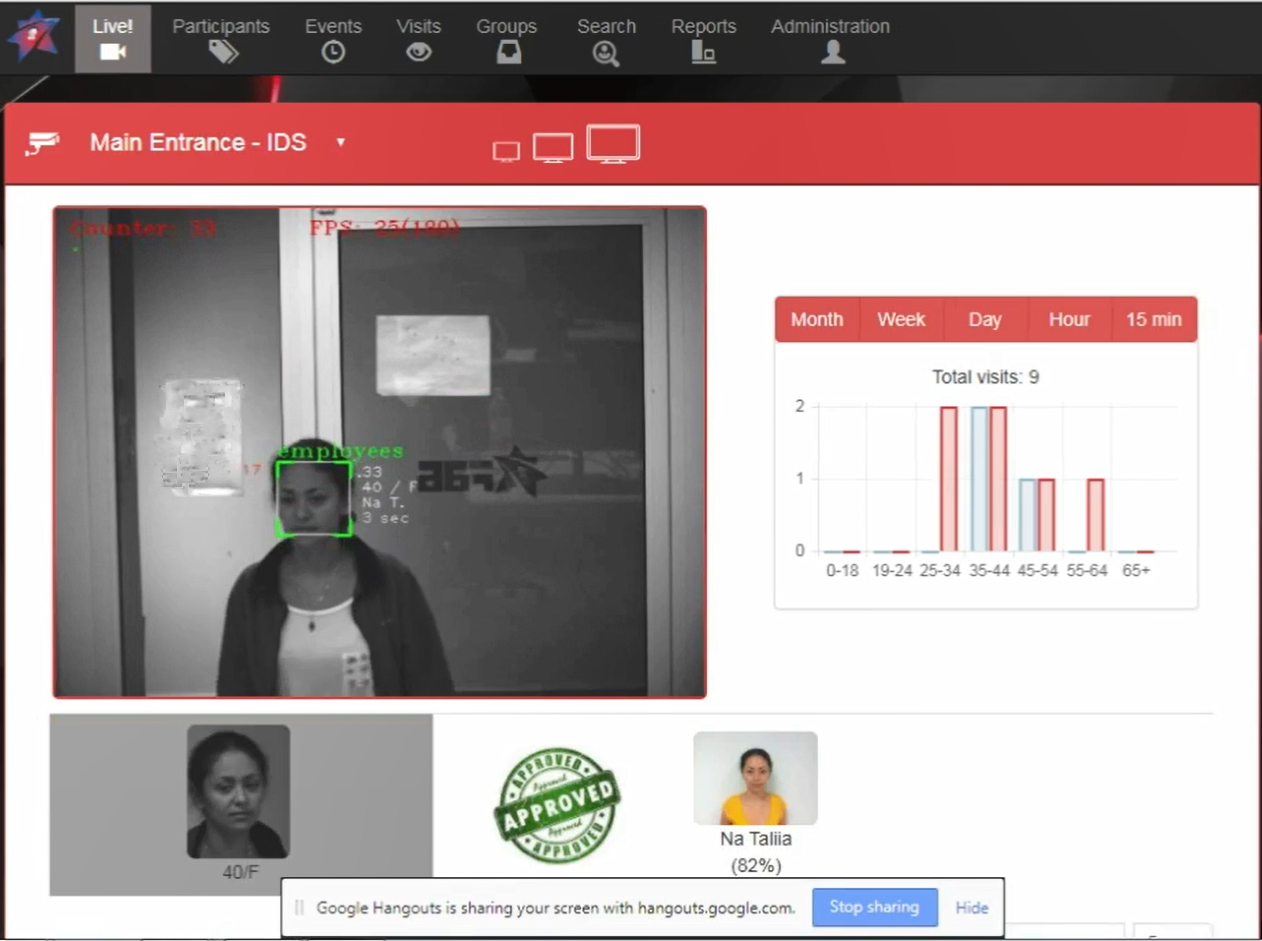
Live Security Dashboard
Facial Recognition System: Architectural Layers
A practical deployment of a facial recognition system combines camera inputs, local video processing, template comparison, database storage, and alert workflows. FA6 Alert can be configured around four core layers that help security teams move from live video to operational decisions:
Optical Capture Assets
The physical front-end consisting of IP surveillance cameras, USB cameras, mobile lenses, or recorded video repositories that feed high-definition visual streams into the network.
Algorithmic Analysis Engine
The local optimization software runtime that dynamically tracks human face boundaries, extracts structural maps, and generates unique 512-point biometric feature sets.
Vector Database Indexes
A highly optimized server architecture hosting enrolled personnel profiles. It evaluates incoming real-time strings against pre-computed templates using ultra-fast similarity algorithms.
Downstream API Webhooks
The administrative API gateway that outputs a system decision. This instantly triggers access controllers, registers attendance logs, or broadcasts real-time security alerts.
Real-Time Security Identification
FA6 Alert is designed for organizations that need live monitoring at entrances, public or private facilities, sensitive areas, factories, and workplaces. Our facial recognition system can identify enrolled suspects, employees, visitors, VIPs, or other persons of interest according to the customer’s operational rules.
Real-Time Security Alerts
Receive real-time alerts (on-screen, SMS, Email) when a person on a watchlist is identified via a camera.
Multiple Live Cameras
Connect live cameras from multiple locations and monitor face recognition events through a centralized system.
Recorded Video Recognition
Use recorded video or still images to search for people, review visits, and support security investigations.
FA6 Alert Features
FA6 Alert combines real-time video processing, watchlist management, enrollment tools, alerts, and history logs for security teams.
Multiple Watchlists
Create and manage different watchlists for suspects, visitors, VIPs, employees, or other groups.
Camera Enrollment
Enroll people from cameras or use bulk enrollment for larger databases and operational deployments.
Mobile Recognition
Support recognition from mobile devices for flexible security and field operation scenarios.
Still Image Recognition
Run recognition from still images when video is not available or when investigators need image-based matching.
SMS and Email Alerts
Send real-time notifications to security teams when a watchlist match is detected.
History and Face Logs
Review face events, alerts, visits, cropped face images, and recognition history.
Security Applications
FA6 Alert can be adapted to different security and identification scenarios, including smart cities, law enforcement, community protection, facility security, and private organizations.
Smart Cities
Monitor selected locations and identify people from multiple connected cameras according to the project design.
Law Enforcement
Support suspect identification via IP cameras, smartphones, or body cameras. Investigate recorded videos or still images.
Community Safety
Help protect community facilities by identifying known persons of concern when they enter monitored areas.
Business Security
Help protect offices, warehouses, and other business facilities with watchlist alerts and live monitoring.
School Security
Help protect school entrances by identifying enrolled persons of concern when they appear on monitored cameras.
“The FA6 Alert system gives us an extra safety net across a very large facility. We loaded the county sex offender list into the software, and using our entrance cameras, it alerts our team if someone on that bad guys list is identified when entering the building.”
“The Warehouse covers more than 200,000 square feet, so it is difficult for staff to manually monitor every entrance. Having cameras at the main doors connected to FA6 has helped us provide another layer of protection for the children, families, and visitors who come here.”
“We have been very happy with the face recognition software and the support. The Face-Six team helped us position the cameras correctly, and their technical support has been amazing.”
— David Weil, Executive Director,
The Warehouse, Bloomington, IN
Decentralized Edge Facial Recognition System Architecture
FA6 Alert can process video near the camera or on local hardware, then send compact face-event data to the central server. This design can reduce bandwidth use, support faster workflows, and help organizations configure privacy-oriented deployments according to their operational and legal requirements.
Local Vectorization
The local FA6 Agent processes live RTSP video feeds frame-by-frame on local hardware assets. It runs local neural network inference to isolate facial boundaries instantly.
- 30 FPS multi-stream processing
- ONNX / C++ optimization runtime
- Hardware-accelerated edge tracking
Tokenized Privacy
Detected faces are immediately compiled into small, one-way numerical strings (embeddings). The source image payload is instantly deleted from memory storage.
- 512-point float array conversions
- Strict GDPR & BIPA design compliance
- Zero permanent local image footprint
Ultra-Lean Payload
Instead of routing heavy media files, the agent sends only the tiny text array token via TLS 1.3 encryption tunnels directly to your host dashboard.
- Less than 2 KB data packet size
- TLS 1.3 / mTLS point configurations
- 99% drop in active network strain
Sub-150ms Validation
The centralized server uses custom relational database indexing schemas to compare incoming coordinate text tags against database watchlists.
- PostgreSQL HNSW index parameters
- Million-row lookup matches in <150ms
- Automated push alert systems
Deployment Engineering Note: By removing cloud-side neural vectorization dependencies, central server requirements drop to lightweight computing specifications. This allows the centralized tracking layer to easily scale across commercial container environments or lightweight on-premise environments without needing costly dedicated cloud GPUs.
Supported Cameras and Platforms
FA6 Alert can be configured for different camera, server, and operating environments according to project requirements, camera layout, network design, and security workflow.
IP and CCTV Cameras
Connect compatible IP and CCTV cameras for live monitoring, entrance security, facility protection, and multi-camera deployments.
USB and Web Cameras
Use USB and web cameras for smaller security setups, access points, reception areas, local workstations, and controlled environments.
Windows and Linux
Client and server components can be configured for Windows or Linux environments, with database support for watchlists, events, visits, and alerts.
Related Face-Six technology: ULLTRAS C++ RTSP Android streaming for ultra-low-latency video applications.
Security Technology Built for Real Deployments
Face-Six has been developing face recognition technology since 2012, with experience in real-time video, surveillance projects, security workflows, alert systems, and use-case oriented deployments.
Real-Time Project Experience
Built around live video surveillance, fast matching, watchlist alerts, and operational identification workflows.
Decentralized Edge Deployment
Designed to process heavy vector calculations locally on peripheral hardware, reducing hosting infrastructure costs and ensuring infinite multi-camera scalability.
Training and Operation Guidance
Customers can receive guidance on camera placement, enrollment, watchlists, thresholds, alerts, and daily system operation.
Looking for a Facial Recognition System for Security?
Contact Face-Six to discuss FA6 Alert for live cameras, watchlist alerts, recorded video, mobile recognition, or a custom security deployment.